
A plain guide to Maidstone planning applications: searching the Mid Kent portal, weekly lists, comment deadlines and what counts as an objection.
If someone proposes an extension next door, a shop conversion on your street or a hundred homes on the field behind you, you have a right to see the drawings and a right to say what you think before anyone decides. Maidstone planning applications all sit on one free online register, going back to 1974, and you do not need an account to read any of it. Most people only find out a scheme exists once the hoardings go up. This guide covers where the applications live, how to search the portal properly, how long you have to comment, what the council can and cannot take into account, and how to get told automatically when something lands near you.
Where Maidstone planning applications live
Every application received or decided by Maidstone Borough Council goes on the Mid Kent Public Access portal, a shared system run with Swale Borough Council:
You can look without signing in. Type a street name, a postcode or a reference and you get the documents, the drawings, the case officer, the target decision date and any comments already submitted. Site history goes back to 1974, so it is also the fastest way to check what has previously been proposed or refused at an address you are thinking of buying (Maidstone Borough Council, search for a planning application).
Registering a free account adds the useful extras: saving searches, subscribing to updates, tracking individual applications and commenting online.
Reading a Maidstone application reference
A current reference looks like 26/502845/AGRIC. The first two digits are the year, the middle block is the running number, and the suffix is the application type. FULL is a full planning application, AGRIC a prior notification for agricultural development, BGP a biodiversity gain plan, and there are others for listed building consent, advertisement consent and the rest.
Older applications are the trap. Anything from the pre-2013 numbering carries a two letter prefix, and the portal will not find it unless you drop those letters. An application filed as MA/11/1234 must be searched as 11/1234. The council also warns that you can search by parish or by ward, but not across the whole borough at once, so leave your keyword loose and narrow down from the results.
How to search the portal, step by step
- Open pa.midkent.gov.uk/online-applications. No login is needed to view.
- Use Simple Search for a quick look, or Advanced Search to filter by parish, ward, date range or application type.
- Enter a street, a full postcode or a reference. For a pre-2013 case, strip the two letter prefix first.
- Open the application and use the Documents tab for the drawings, design and access statements, heritage and drainage reports, and the Comments tab to read or add a representation.
- Check the Important Dates panel on the summary. That is where the target decision date and the consultation deadline live, and it is the authoritative version rather than anything printed on a letter.
If you would rather browse than search, the council publishes weekly lists of everything recently received and validated and everything recently decided, each covering the previous week with the reference, description, address, parish, ward, status and case officer set out in full.
Get told automatically
Running the same search every Monday is easy to forget. Two ways to automate it:
- Save a search on Public Access. Register an account, run the search you care about (usually a postcode, a street or your ward), then save it and switch on notifications. The portal emails you when a matching application is validated.
- Subscribe to the weekly lists. The council sends the received and decided lists straight to your inbox through its Stay Connected service.
Either habit means you hear about a neighbour’s plans on day one rather than after the comment window has half gone.
How long you have to comment
The council publicises every application it receives. It must write to properties next to the site, put up a site notice nearby, and place a notice in a newspaper where the law requires it, which covers listed buildings, conservation areas and public rights of way (Maidstone Borough Council, have your say on planning applications).
The consultation deadline for each individual application is shown on its own page on the portal. Check there rather than counting days from a letter, because not everyone gets a letter: only immediate neighbours are written to directly, and if you are two streets away the site notice or the weekly list is the only thing that will tell you.
Most decisions take about eight weeks from validation, though the council is clear this can change. The target decision date is published under “important dates” on the application.
If plans are amended part way through, the law does not require the council to reconsult. It decides case by case, weighing how serious the original concerns were, how big the change is, whether it makes things worse, and whether earlier comments already cover the point.
How to comment, and what actually counts
Comments must be in writing. Verbal comments are not accepted. You can:
- comment online through the Public Access portal,
- email planningcomments@midkent.gov.uk, or
- write to Mid Kent Planning Support, Maidstone House, King Street, Maidstone, ME15 6JQ.
Whichever route you use, the comment must be dated, give your name and address, and quote the application number and the site address. Anonymous comments will not usually be taken into account, and anything personal, racist, defamatory or derogatory is discarded, as are photographs showing identifiable people. Since 3 February 2025, comments published on the website no longer display your name or address, although comments made before that date may still show them.
Here is the part people get wrong. A decision can only turn on material planning considerations. The council’s own published list of what it can weigh includes overshadowing, loss of light or privacy, visual appearance, parking provision, traffic and highway safety, noise, smells and disturbance from the proposed use, loss of trees or landscape features, design and materials, the effect on listed buildings and conservation areas, layout and density, flooding, and wildlife.
What it explicitly cannot weigh: matters covered by building regulations or other laws such as structural stability and fire precautions, private disputes between neighbours over boundaries, ownership, covenants or rights of way, loss of property value, disruption during construction such as noise, dust and site traffic, loss of a view, competition between rival businesses, and anything personal about the applicant (Maidstone Borough Council, comment on planning applications).
What it means for you: an objection written in the language of the planning merits carries weight; one written about the applicant, your view or your house price does not, however strongly it is felt. A handful of clear, policy-grounded objections usually count for more than a hundred copied ones.
Who decides, and what happens after
Most applications never go near a politician. They are decided by planning officers under delegated powers. Others go to the Planning Committee, where elected councillors vote in public. In both cases the case officer writes a report explaining the proposal, summarising the comments received and addressing the planning matters and policies that apply.
If you have commented on an application that will be decided by the Planning Committee, the council will tell you in writing, along with the date, time and location of the meeting and how you can speak at it. Be ready to move quickly: the council may give as little as five working days’ notice.
Decision notices are not posted out to people who commented. To find out an outcome, either check the application on the portal, where the decision notice and the officer’s report both appear under Documents, or register an account and opt in to updates.
If an applicant appeals a refusal, the case goes to the Planning Inspectorate and the council will notify neighbours and anyone who commented. Every comment already received is passed on. One change to note: from 1 April 2026, new comments cannot be submitted at the appeal stage for developments of fewer than ten houses, so if a small scheme concerns you, the time to write in is during the original application.
The Local Plan behind the decisions
Individual applications are judged against the Maidstone Borough Local Plan Review 2021-2038, adopted on 20 March 2024. It replaced the 2017 Local Plan, though some 2017 policies were retained, and it sets the policies used to determine every application in the borough. If you want to understand why a scheme was approved or refused, the plan is where the reasoning starts. It is published in full, with an interactive policies map, on the council’s local plan site. For where the plan is heading, the rising housing target, the Heathlands and Lidsing garden communities and the decisions shaping the borough, see our Maidstone planning news page.
Frequently asked questions
How do I find planning applications in Maidstone?
Search the Mid Kent Public Access portal at pa.midkent.gov.uk/online-applications by address, postcode or reference number. No account is needed to view. The council also publishes weekly lists of applications received and applications decided.
What is the Maidstone planning portal?
It is the Mid Kent Public Access register, shared between Maidstone and Swale borough councils, at pa.midkent.gov.uk/online-applications. It holds plans, documents, case officer details and comment deadlines, with site history back to 1974, and it is free to search.
Why can I not find an old Maidstone planning application?
Because of the reference format. Older applications carry a two letter prefix that the portal does not recognise, so search MA/11/1234 as 11/1234. You can also search by parish or ward, but not across the whole borough at once.
How do I object to a planning application in Maidstone?
In writing only: through the portal, by email to planningcomments@midkent.gov.uk, or by post to Mid Kent Planning Support, Maidstone House, King Street, Maidstone ME15 6JQ. Date it, give your name and address, quote the reference and site address, and stick to material planning considerations.
Do comments on Maidstone planning applications show my name?
Not since 3 February 2025. Comments published on the website no longer display the commenter’s name or address, though comments made before that date may still show them. Anonymous comments are not usually taken into account.
How long does a Maidstone planning decision take?
About eight weeks in most cases, though it varies. The target decision date for each application is shown under “important dates” on its page on the portal.
Sources
- Maidstone Borough Council, search for a planning application, for the portal, the 1974 site history and the reference-prefix rule
- Mid Kent Public Access planning portal, the register itself
- Maidstone Borough Council, comment on planning applications, for the material and non-material considerations lists and the contact details
- Maidstone Borough Council, have your say on planning applications, for publicity, the eight week target, the anonymity change and the April 2026 appeal-comment rule
- Maidstone Borough Council, recently received and recently decided planning applications
- Maidstone Borough Council, adopted Local Plan Review 2021-2038
Details were checked against the council’s planning pages in August 2026. Comment deadlines and application statuses change constantly, so always confirm on the portal before relying on a date. Our guides to council tax bands and parking in Maidstone cover the other council services people ask about most.
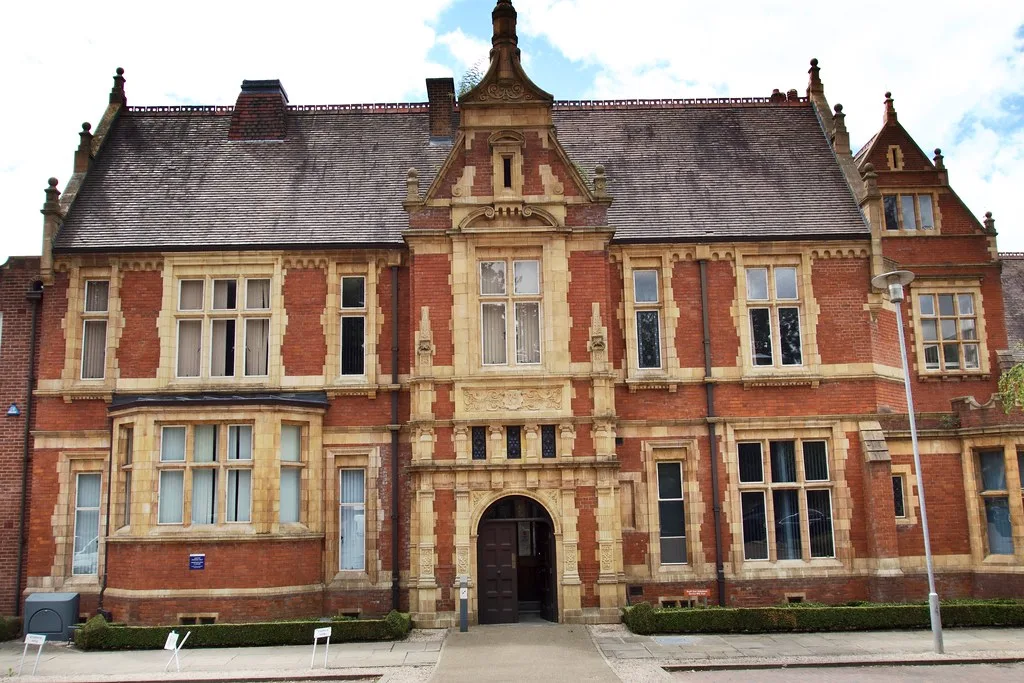
Image: Springfield in Maidstone, a Victorian building on a town centre site. It is shown as a general view of the borough’s built environment and is not connected to any application mentioned here. “Springfield Maidstone” by John K Thorne, CC BY 2.0, via Flickr (https://www.flickr.com/photos/89918055@N05/50013146971).
Have your say